Staging Mass
STAGING MASS PRO
KILOGRAMS (KG)
Payload to Total Ratio
Rocket Staging
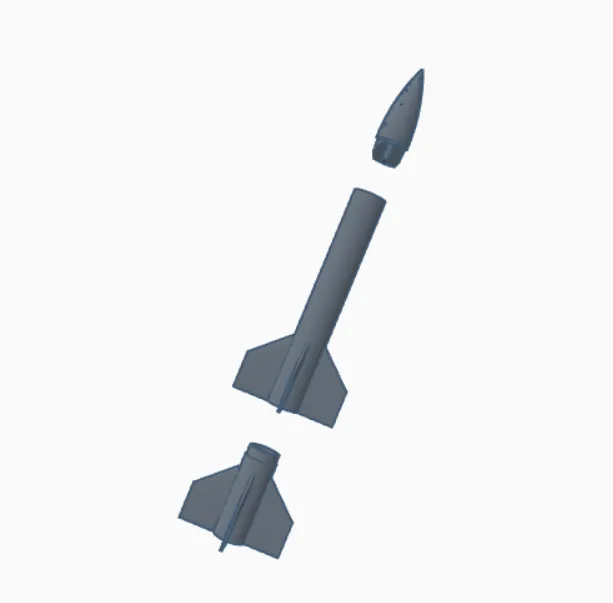
The Mass Shedding strategy. Staging allows a rocket to "lose weight" mid-flight. By discarding empty tanks and heavy sea-level engines, the vehicle maintains a high Thrust-to-Weight Ratio even as it reaches the vacuum of space.
- ⑃ MECO: First stage shutdown to prepare for release.
- ⑃ Hot Staging: Igniting the upper stage before the lower one fully separates.
- ⑃ Dry Mass: The weight of the rocket structure without fuel.
Stage 2: Orbital
The Precision Phase. Operating in a near-vacuum, Stage 2 uses massive expansion nozzles to maximize exhaust velocity. Its job is to provide the final 45 km/s of velocity needed to stay in orbit indefinitely.
- ✧ Vacuum Start: Ignited after the "Stage 1 Away" command.
- ✧ Payload Fairing: Usually jettisoned during this stage.
- ✧ SECO: Second Engine Cut-Off (The moment of weightlessness).
Stage 3: Deep Space
The Escape Vector. Stage 3 is the engine of discovery. It provides the delta-v required to climb out of Earth’s gravity well (11.2km/s). It is a masterpiece of cryogenic engineering, designed to stay "alive" in the vacuum for long-duration coasts.
- ✦ Cryogenic Reignite: Capable of multiple starts in zero-g.
- ✦ Attitude Control: Uses cold-gas thrusters for 3-axis stability.
- ✦ Payload Release: The final "handshake" before the mission begins.
Why Shed Parts?
Efficiency through Discard. In rocketry, the "Empty Tank" is your greatest enemy. Staging is the only way to maintain a high enough Acceleration Profile to reach orbital velocity without building a rocket the size of a mountain.
- ⌿ Parasitic Mass: Removing the weight of empty structures.
- ⌿ Thrust-to-Weight: Improving the "Push" per kg of vehicle.
- ⌿ Delta-V: Multiplying the total speed potential of the craft.
Mission Metrics
The Performance Envelope. These numbers determine the viability of a mission. If your Delta v is too low, you don't reach orbit. If your Payload Fraction is too high, the rocket will be too heavy to lift off.
- 📊 Delta-v: Your total "fuel capacity" measured in speed.
- 📊 Payload Fraction: The efficiency of your structural design.
- 📊 Multi-Stage: Sequential burning to maximize velocity.
Mass Calculation Error
The Gravity Penalty. If a stage's dry mass is underestimated, the rocket carries "Parasitic Weight" that eats into its velocity budget. This is the most common reason for rockets reaching space but failing to reach Orbit.
- ⚠️ Lower Δv: The rocket runs out of fuel before reaching speed.
- ⚠️ TWR Drop: The rocket becomes too heavy for the engine to lift.
- ⚠️ Sub-Orbital: The craft falls back to Earth (re-entry failure).