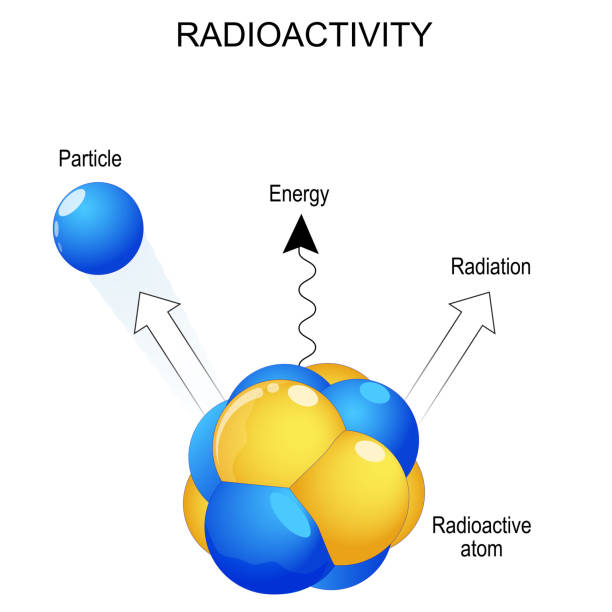
Physics Half-Life
HALF-LIFE
NUCLEIC DECAY QUANTIFIER
Carbon-14: 5,730 years
Stability Hub
The Atomic Clock. Half-life is the Universal Ledger of Decay. It is the only metric that allows us to look back billions of years into a planet's history with mathematical certainty.
- ⏳ Fixed Interval: The time required for a 50% state transition.
- 📉 Exponential: Why radioactive material never truly hits "zero."
- 🧱 Daughter Products: What's left behind after the decay is finished.
N-Naught Hub
The Origin Point. $N_0$ is the Atomic Heritage of a sample. It is the snapshot of matter at the very moment of creation, before the clock of decay begins to tick.
- 🏁 t = 0: The absolute starting value of any decaying system.
- 📈 Scaling Factor: The variable that determines the magnitude of the curve.
- 🧱 Conservation: The sum of parents and daughters always equals N0.
Tempo Hub
The Rhythms of Decay. Half-life t₁/₂ is the Universal Constant of Change. It is the steady heartbeat of the atom, ticking away until matter transforms into its final, stable form.
- ⏳ 0.693 / λ: The math that defines the survival of the nucleus.
- 📉 Constant Rate: Why half-life never changes, regardless of sample size.
- 🔬 Dating: The primary tool for unlocking the age of the solar system.
Time Hub
The Forward Arrow. Elapsed Time (t) is the Universal Progression. In the quantum realm, it is the variable that transforms potential energy into stable history.
- ⏱️ t Variable: The actual duration recorded by the observer's clock.
- 📉 Exponential Flow: How time dictates the depletion of the nucleus.
- 🏹 Entropy: Why time only moves toward the decay of the parent atom.
Radioactive Decay
N = N0 e^(-λt)
N = Remaining quantity
N0 = Initial quantity
λ = Decay constant
t = Time elapsed