Newton First Law
Inertia Sync
Motion Mapping. Analyzing the Net Force / Mass Constant. The Oat monitors the Motion Buffer to track the equilibrium of objects in the inertial frame.
- 🛑 Static: Objects at Rest Maintain Stability.
- 🏎️ Dynamic: Constant Velocity Sync Protocols.
- ⚖️ Net Zero: Unbalanced Force Detection Active.
Inertia Logic
Resistance to Change. Every object in the universe is fundamentally stubborn. It resists any change to its current state of motion.
- 🗿 Stationary: Stays at rest until forced.
- ☄️ Moving: Keeps moving unless friction stops it.
- ⚖️ Mass: Inertia increases as mass grows.
Real-World Inertia
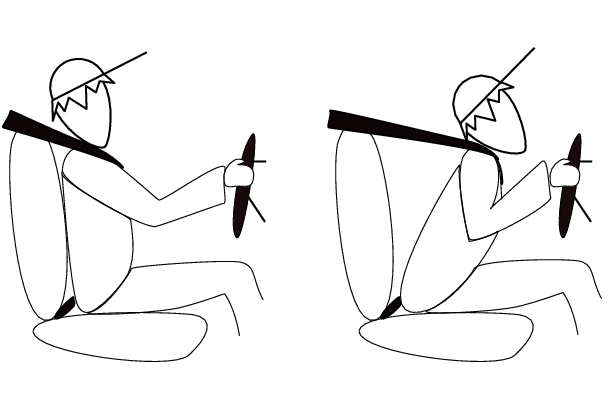
Inertia in Action. From the seatbelt in your car to the dust in your carpet, Newton's First Law governs every moment of your day.
- 🚌 Transit: Why you lean when the bus turns or stops.
- 🧹 Cleaning: Removing dust by moving the fabric away from it.
- ⚽ Sports: Why a ball keeps rolling on smooth grass.
Force Vectors
Breaking Inertia. When forces are Unbalanced, the equilibrium is destroyed, and the object is forced to accelerate.
- 🚀 Acceleration: Velocity changes in the direction of the net force.
- 📐 Vector Math: The sum of all forces (Sigma F) is greater than zero.
- 🛑 Motion Shift: Objects at rest start moving; moving objects change speed.
Surface Grip
The Invisible Brake. Friction is the Unbalanced Force that eventually stops every moving object on Earth.
- 👟 Traction: Allows your shoes to push against the Earth to move.
- 🔥 Heat: Friction converts kinetic energy into thermal energy.
- 🛑 Deceleration: The force responsible for slowing down cars and bikes.
Why It Matters
The Foundation of Safety. Without the First Law, we couldn't predict how objects behave in Space or design Safety Systems for cars.
- 🛡️ Life Safety: Designing seatbelts, helmets, and airbags.
- 🌌 Deep Space: Navigating satellites without constant fuel.
- 🏗️ Engineering: Understanding forces to build stable structures.
Sources
INERTIA CONCEPT
Inertia is the resistance of any physical object to any change in its velocity. This includes changes to the object's speed or direction of motion.
INERTIA BASICSNET FORCE ($\sum F$)
If the net force is zero (F = 0), acceleration is zero. An object in space keeps moving forever because there is no air friction to stop it.
FORCE VECTORSREAL-WORLD BRAKING
When a car stops suddenly, your body continues forward. This is your inertia at work, which is why seatbelts (external forces) are necessary.
APPLICATIONPaper
INERTIA ANALYSIS 🍎
Randomized: 5 Questions from our 50-item Dynamics Bank.
Inertia
Objects resist changes to their motion.
State 1 = Rest stays at Rest
State 2 = Motion stays in Motion
Requirement = Net Force (ΣF ≠ 0)