
The Planet Mercury
METALLIC INTERIOR
The Iron Planet
Mercury is the second densest planet in the solar system. Its massive iron core takes up about 85% of the planet's radius.
Nearly as dense as Earth (5.51).
Dominant metallic structure.
Project Mercury
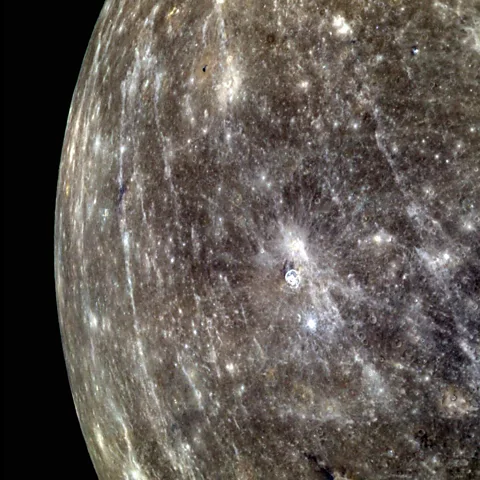
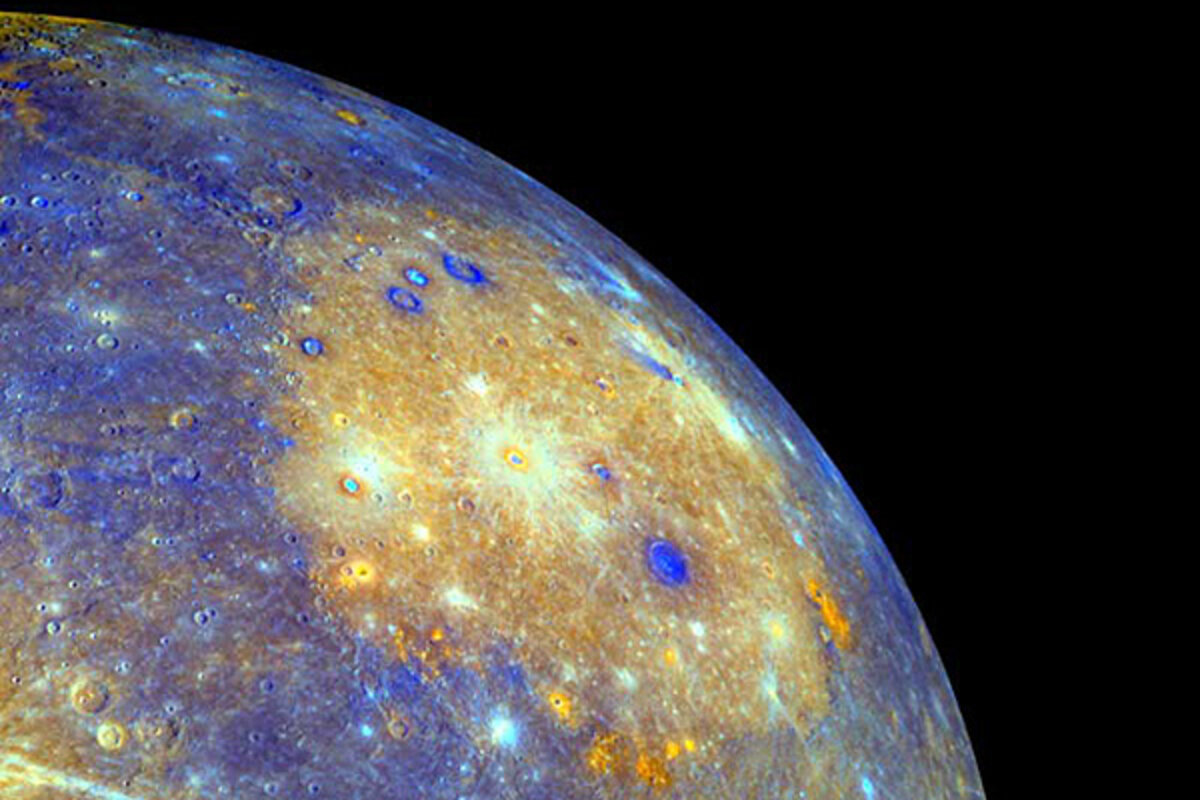
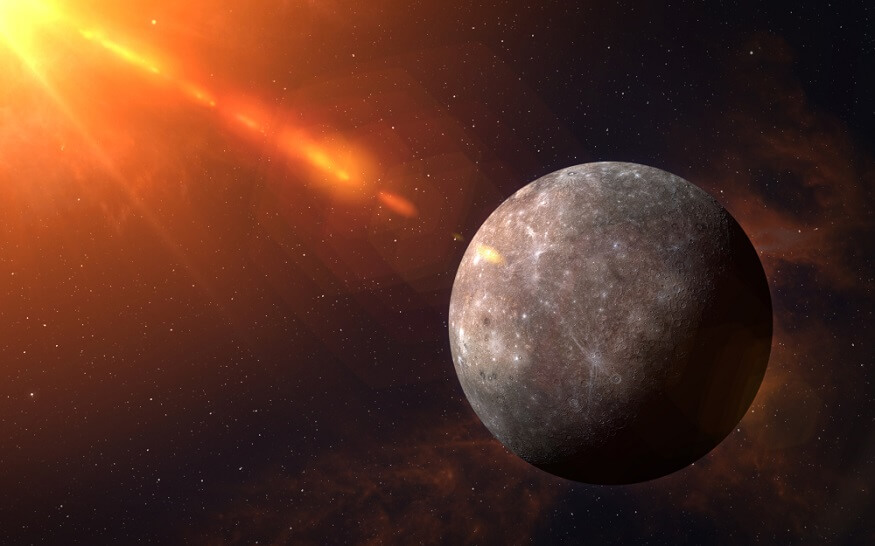
The Iron Planet. A world of extreme thermal variance and high-density composition, orbiting the Sun every 88 Earth days.
- 🌑 Smallest Planet: Only 4,879 km in diameter.
- ⚙️ Iron Core: Occupies roughly 85% of the planet's radius.
- 💨 Thin Exosphere: Oxygen, sodium, hydrogen, and helium.






Cosmic Address
Universal Coordinates. Mapping Mercury from its sun-scorched orbit to the massive filaments of the Laniakea Supercluster.
- ☀️ Sector 001: 0.39 AU from the Sun, Inner Solar System.
- 🌀 Galaxy Arm: Orion Spur, 26,000 LY from Galactic Center.
- 🌌 Laniakea Supercluster: Part of a 520-million-light-year structure.
Gravity Well
The Core Effect. Mercury's mass is concentrated in a giant iron core, giving it a 0.38g surface pull despite its tiny size.
- ⚖️ Surface Gravity: 3.7 m/s² (identical to the much larger Mars).
- 📦 Mass Efficiency: 5.5% of Earth's mass in a 38% radius.
- 🚀 Escape Speed: 4.25 km/s required to break the planet's hold.
Time Paradox
3:2 Resonance. Mercury completes three rotations for every two orbits, creating a world where the Day is longer than the Year.
- ☀️ Solar Day: 176 Earth Days from sunrise to sunrise.
- 🔄 Double Sunrise: The Sun appears to reverse course at perihelion.
- 📅 Calendar Shift: You celebrate two birthdays in a single Mercury day.
Slow Spin
Rotational Inertia. Mercury's equatorial speed is just 10.8 km/h—slow enough for a human to keep pace with the sunset by jogging.
- ⏳ 59 Earth Days: The time required for a single 360° rotation.
- ⚖️ Resonance: Locked into a 3:2 spin-orbit cycle by solar gravity.
- 🌡️ Thermal Variance: The slow turn causes the largest temp swings in the system.
Magnetic Oat
The Liquid Dynamo. Mercury's molten core generates a magnetic shield that deflects the solar wind, creating a Sodium Tail millions of kilometers long.
- ☄️ Sodium Tail: A comet-like stream of atoms pushed by sunlight.
- 📉 Contraction: Global shrinkage has created 2km-high cliffs.
- ✨ Hollows: Unique depressions formed by vaporizing minerals.
Polar Deposits
The Cold Traps. Despite being the closest planet to the Sun, Mercury hides millions of tons of water ice in craters that never see light.
- 🧊 Cometary Ice: Ancient water frozen in -170°C shadows.
- 🕸️ The Spider: Unique radial fractures found only on Mercury.
- 🔭 Exosphere: A thin atmospheric veil of solar-blasted atoms.
Diamond Mantle
Exotic Interior. Scientific data suggests Mercury hoards its carbon as a massive diamond shell deep beneath its graphite-stained surface.
- 🛰️ BepiColombo: Arriving November 2026 to map the interior.
- 🧱 Thickness: An estimated 18 km of solid diamond crystal.
- 🌀 Ring Current: New evidence of complex plasma trapped in its field.
Mission Status
Arrival: November 2026. BepiColombo has completed its final gravity assist and is now on its direct insertion path to Mercury.
- 🔍 High Res: M-CAM images now resolving craters only 295km away.
- 🌋 Nathair Facula: Confirmed as Mercury's largest explosive volcanic vent.
- ❄️ Polar Proof: Flybys captured direct views into "forever-shadowed" ice craters.
Sodium Tail
Spectral Glow. Every 88 days, the Sun's radiation pressure creates a 24 million km plume of glowing yellow sodium atoms.
- 🧂 Salt Glaciers: Slow-moving mineral flows discovered in polar craters.
- 📏 Scale: The tail is 100x longer than Earth's entire diameter.
- 💛 589 nm: The specific wavelength where Mercury "glows" brightest.
Sky Position
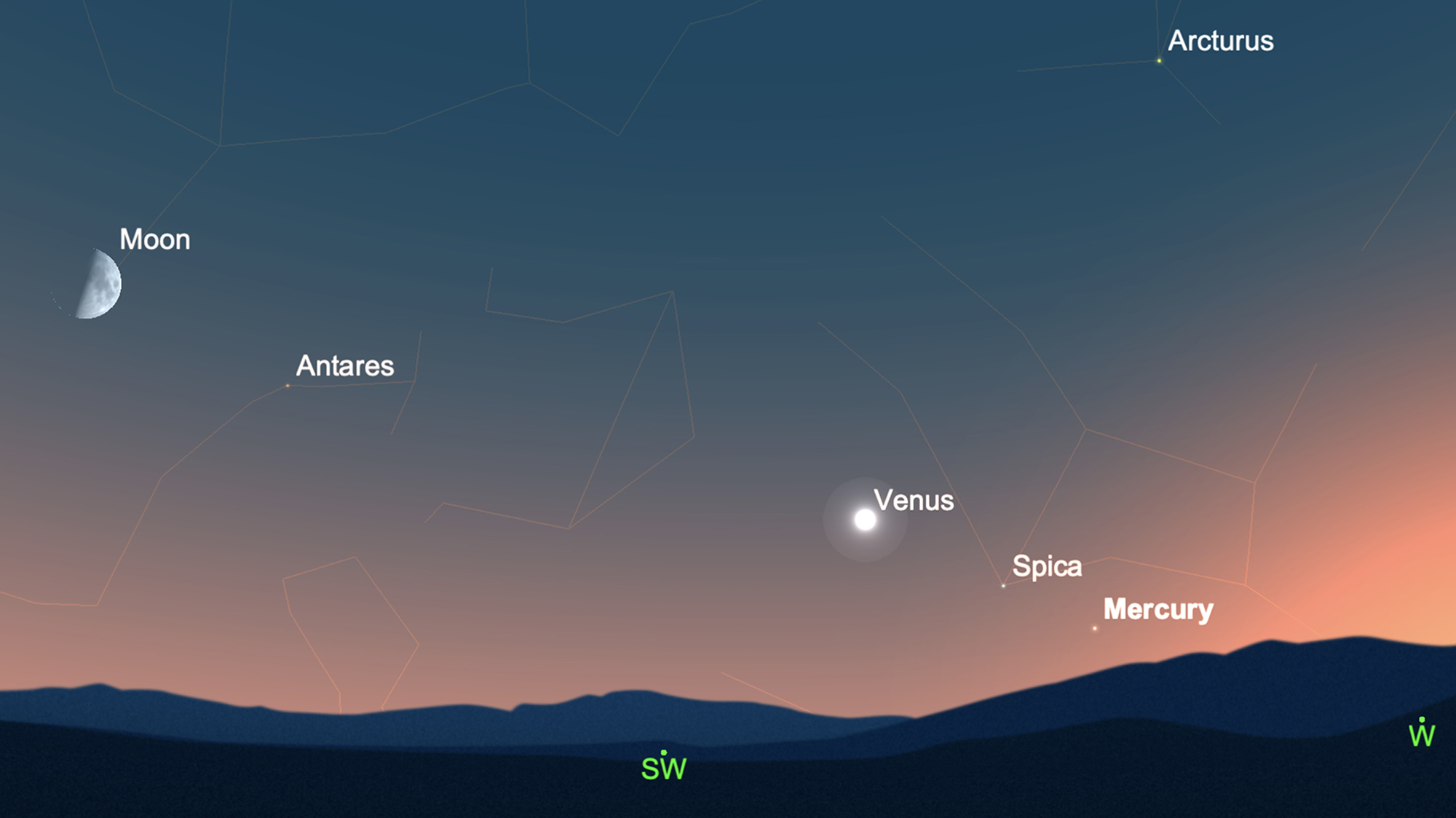
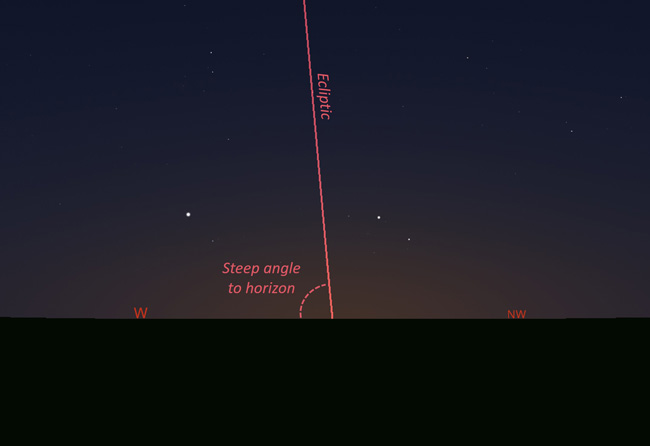
The Elongation Limit. Mercury never wanders far from the Sun. Its visibility is a fleeting window of 45 to 90 minutes at dawn or dusk.
- 🌅 Evening Star: Visible in the West shortly after the Sun sets.
- 🌄 Morning Star: Visible in the East shortly before the Sun rises.
- 📏 28° Max: The widest angular gap between Mercury and the Sun.
:max_bytes(150000):strip_icc()/mercury_apparition-5a8219f01d64040037dbb18e.jpg)


Sources
NASA MERCURY HUB
Comprehensive facts on Mercury’s 3:2 spin-orbit resonance and iron-rich core.
EXPLORE NASAMESSENGER MISSION
The spacecraft that mapped Mercury’s surface and discovered water ice in polar craters.
MISSION DATAESA BEPICOLOMBO
Details on the ongoing joint mission to study Mercury's magnetic field and exosphere.
ACTIVE MISSIONS