The Oat Banner

L Points

LAGRANGE POINTS

GRAVITATIONAL BALANCE SPOTS

STABILITY NODES:

Parking Spots

Specific locations where a small object can stay in a fixed position relative to two larger orbiting bodies.

L2 DISTANCE
1.5M KM

Away from Earth, opposite Sun.

STABILITY TYPE
METASTABLE

Requires minor station-keeping.

L1-L5

Gravitational Equilibrium. Lagrange points are the Sweet Spots of the cosmos. They allow us to stay "still" in a universe that is constantly in motion.

  • πŸ“ Fixed Position: Orbiting the "nothingness" of a balance point.
  • πŸ”­ JWST L2: Keeping the telescope cold and dark forever.
  • πŸͺ¨ Trojans: Natural "parking lots" for ancient asteroids.
βš–οΈ
LAGRANGE SYNC
Fnet = 0
STATUS: βœ… PARKING ACTIVE
GRAVITY-LOCK ACTIVE βœ…

Point L1

The Inner Lookout. L1 is the Saddle Point of gravity. It is where we park our most sensitive sensors to watch the Sun’s every move before it reaches our atmosphere.

  • πŸ“‘ Early Warning: Detects solar flares 1 hour before Earth impact.
  • πŸ•ΆοΈ Zero Eclipse: No shadows, no interruptions, just pure solar data.
  • πŸ“ The 1% Mark: Sits roughly 1% of the way to the Sun.
πŸ›°οΈ
STATION-KEEPING
L1 COORDS
DIST: βœ… 1,500,000 KM

Point L2

The Quiet Void. L2 is the Thermal Sanctuary. It is the only place where we can hide from the blinding light of our own star to see the very first light of the universe.

  • πŸ›‘οΈ Thermal Shield: Blocks Sun, Earth, and Moon at once.
  • ❄️ Absolute Cold: Essential for high-sensitivity infrared data.
  • πŸ›€οΈ Halo Track: Satellites "loop" around the L2 point to avoid the Earth's shadow.
❄️
πŸ›°οΈ
INFRARED MODE
L2 STATION
TEMP: βœ… 40K (-233Β°C)
πŸ›‘οΈ SUNSHIELD ENGAGED

Point L3

The Hidden Anchor. L3 is the Solar Blindspot. It is the only place in our orbit where you can hide an entire world from the eyes of Earth.

  • πŸ•ΆοΈ Permanent Occultation: The Sun acts as a 1.4 million km shield.
  • πŸ“‘ Comms Blackout: Direct radio signals are swallowed by solar noise.
  • πŸ”„ 180Β° Offset: Always exactly halfway around the orbital track.
πŸ›°οΈ
FAR SIDE SYNC
L3 SECTOR
EARTH: πŸ›°οΈ NOT DETECTED
SHADOW-LOCK ACTIVE βœ…

Point L4

The Leading Anchor. L4 is the Gravity Trap. It is the celestial "front porch" where the solar system stores its ancient relics and where we will build our future outposts.

  • πŸ“ 60Β° Lead: Always exactly 1/6th of an orbit ahead of Earth.
  • πŸͺ¨ Asteroid Haven: Home to "Trojans" that never leave the point.
  • πŸ›‘οΈ Static Stability: Objects naturally return here if nudged.
πŸͺ¨
πŸ›°οΈ
TROJAN STATION
L4 LEADING
STABILITY: βœ… MAXIMUM
GRAVITY-BOWL ACTIVE βœ…

Point L5

The Trailing Sanctuary. L5 is the Logistical Harbor. It is the perfect "safe harbor" in our orbital path, trailing Earth like a silent guardian of space-time history.

  • πŸ“ 60Β° Lag: Perfectly balanced in the Earth's orbital wake.
  • 🏘️ Colony Site: The primary candidate for large-scale space stations.
  • πŸŒ€ Coriolis Force: The physics engine that keeps L5 stable.
🏘️
STATION KEEPING
L5 TRAILING
FUEL EFFICIENCY: βœ… 99%
HABITAT-SYNC ACTIVE βœ…

Strategic L

The New Real Estate. Lagrange points aren't just coordinates; they are the Strategic Anchors of the space economy. From defense to discovery, they provide the "High Ground" of the 21st century.

  • πŸ“‘ Early Warning: L1 provides the world's solar-flare "Siren."
  • 🌌 Deep Sight: L2 allows us to see the "Invisible" Universe.
  • πŸ›£οΈ Gravity Lanes: Using L-points as "Rest Stops" for Mars.
πŸ—ΊοΈ
MISSION PROFILE
L points UTIL
OBJECTIVE: βœ… DOMAIN AWARENESS
SECTOR-SYNC ACTIVE βœ…

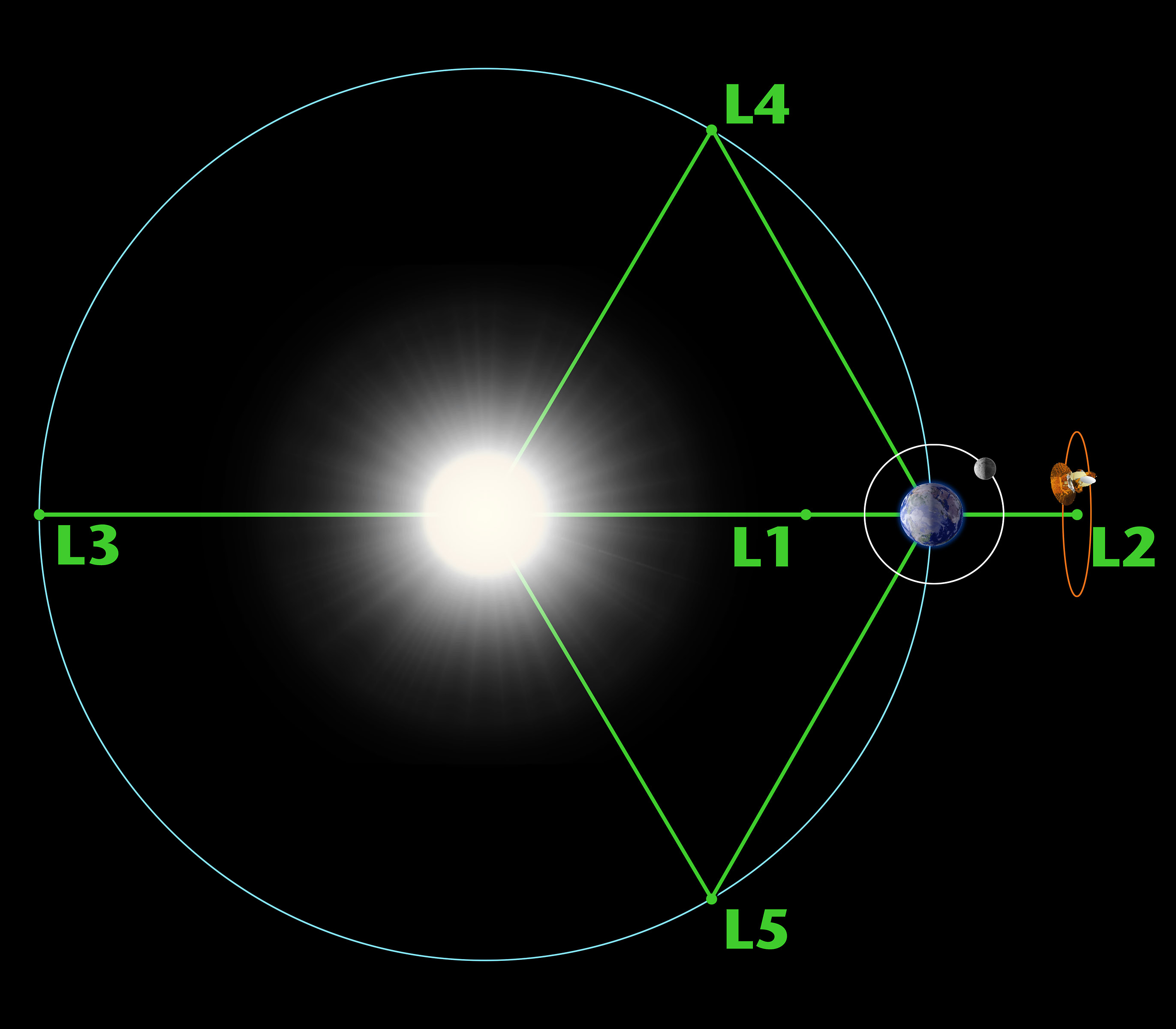
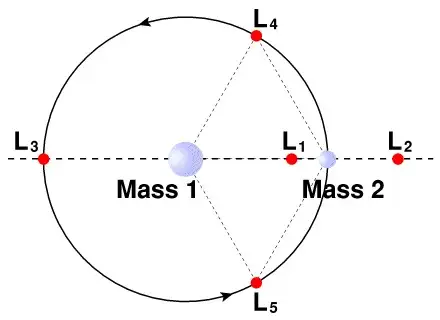
L-Point Map


Mapping the five stability zones between two celestial bodies.

Orbital Mechanics
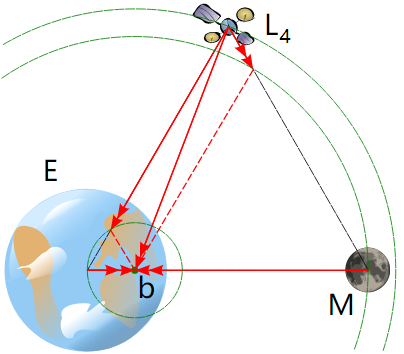

Visualizing the gravitational peaks and valleys of the Earth-Sun system.

Aditya-L1 Path

Destination: Halo Orbit (L1)

Utility: Constant Solar View

Source: ISRO / NASA

Sources

NASA: L-POINTS


A clear breakdown of why L1 and L2 are the "parking spots" for telescopes like SOHO and James Webb.

BASIC CONCEPTS
Celestial Mechanics

ESA: L2 ORBITS


Deep dive into the specific math behind the Sun-Earth L2 point used by the Gaia mission.

ORBITAL DATA
Mission Planning

STABILITY MAPS


Mathematical proof showing why L4 and L5 are stable (Trojan points) while L1, L2, and L3 are unstable.

STABILITY GUIDE
Dynamic Balance