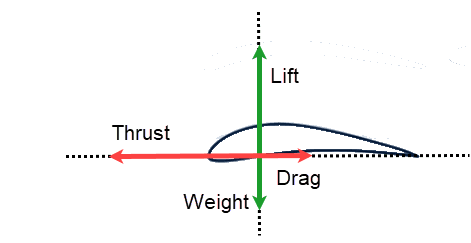
Aerodynamic Drag
DRAG ANALYZER
NEWTONS (N)
Waiting for motion data...
Aerodynamic Drag (D)
The Atmospheric Brake. Drag is the force acting opposite to the rocket's motion. It is determined by the air density, the square of the velocity, and the Drag Coefficient of the rocket's shape.
- ≋ Max Q: The point of maximum structural stress from drag.
- ≋ Streamlining: Why nose cones are pointed (to shed air).
- ≋ Ballistic Coefficient: A measure of how well a rocket "cuts" through air.

Air Density (ρ)
The Atmospheric Mass. Measured in kilograms per cubic meter, density is the "medium" of flight. It dictates everything from the shape of the nozzle to the maximum speed the rocket can safely reach in the lower atmosphere.
- ◌ Sea Level: 1.225 kg/m³ (The "Thick" zone).
- ◌ Vacuum: ~0.000 kg/m³ (Zero resistance).
- ◌ Boil-off: Lower density affects cryogenic fuel stability.

Drag Coeff (Cd)
The Shape Efficiency. The Drag Coefficient is a dimensionless value that quantifies the resistance of an object in a fluid environment. For rockets, minimizing this value is critical to reducing Gravity Loss and Fuel Consumption.
- ⬗ Form Drag: Resistance due to the cross-section.
- ⬗ Skin Friction: Resistance from surface roughness.
- ⬗ Wave Drag: Resistance caused by shockwaves at Mach 1.

Frontal Area (A)
The Atmospheric Footprint. Frontal area is the projected surface area that the air "sees" as the vehicle moves. In heavy-lift engineering, managing this area is the key to minimizing Dynamic Pressure during ascent.
- ⊕ Projected Area: The 2D shadow cast by the vehicle.
- ⊕ Reynolds Number: Flow behavior based on size/velocity.
- ⊕ Parasitic Drag: Drag from boosters and fairings.
Flight Dynamics
The Energy Struggle. At Mach 0.73, the vehicle is entering the transonic regime. The 14,438 hp loss represents the massive kinetic energy being drained by atmospheric molecules before the rocket reaches the vacuum of space.
- ⚡ Dissipative Force: Energy lost to air compression.
- ⚡ Mach Velocity: Approaching the sound barrier.
- ⚡ Efficiency Drop: Peak power loss occurs near Max Q.