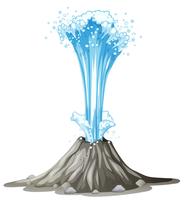
Triton Geyser Height
CRYOVULCANIC PLUME MONITOR
Nitrogen Eruption
Triton's geysers shoot plumes of nitrogen gas mixed with dark dust into the thin atmosphere, reaching incredible heights before being carried away by high-altitude winds.
Vertical reach into the exosphere.
Surface temperature during eruption.
Geyser Height
Cryovolcanic Plumes. In Triton's weak gravity, pressurized nitrogen gas erupts through the ice, towering 8 kilometers above the frozen surface.
- 📏 Vertical: 8,000 meters high.
- ↔️ Horizontal: 150 km wind streaks.
- ☀️ Driver: Subsurface Solar Greenhouse effect.
Vertical Limit
8 Kilometers High. In Triton's near-vacuum and weak gravity, nitrogen plumes reach altitudes that dwarf Earth's highest mountains.
- 📏 Vertical: 8 km straight-up ascent.
- 🌬️ Horizontal: Drifts into 150 km streaks.
- 📉 Gravity: Only 0.779 m/s² (8% of Earth).
Atmospheric Streaks
Horizontal Migration. High-altitude winds catch the dark geyser dust, dragging it across the icy plains to create 150km-long signatures of Triton’s climate.
- 🏁 Range: Over 150 km from the source vent.
- 🌪️ Velocity: 30–50 m/s high-altitude winds.
- 🌑 Material: Dark carbon-rich "tholin" dust.
Sub-Surface Pressure
The Greenhouse Explosion. Trapped solar heat sublimates nitrogen ice into high-pressure gas, turning Triton's crust into a ticking geological time bomb.
- ☀️ Input: Solar penetration through nitrogen ice.
- 💨 Process: Solid-to-gas sublimation.
- ⚡ Result: Pressure-driven supersonic eruption.
Paper
GEYSER LOG 🌋
Subject: Cryovolcanic Eruption. Target: South Polar Cap.
Sources
VERTICAL HEIGHT
Eruptions shoot nitrogen gas and dust plumes directly upward to an altitude of **8 kilometers** (5 miles).
NASA MISSION DATAHORIZONTAL DRIFT
Once the plumes reach the thin atmosphere, they drift horizontally for over **150 kilometers** due to high-altitude winds.
VOYAGER IMAGERYDRIVING FORCE
Subsurface nitrogen is heated by the Sun through a "greenhouse effect" in the ice, creating pressure that vents through cracks.
CRYOVOLCANO MATHFrozen Poles

Mapping the southern hemisphere's nitrogen ice sheet and streak deposits.
Cryo-Eruption
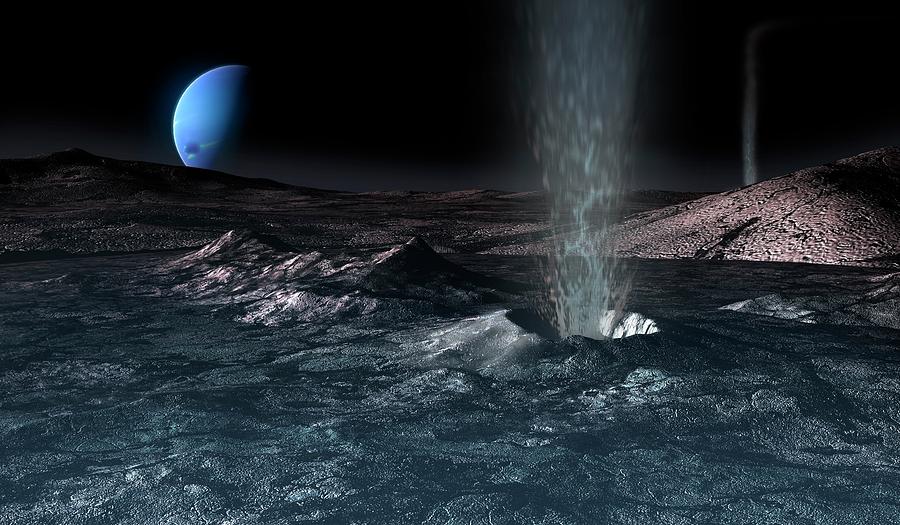
Visualizing sunlight heating subsurface nitrogen to trigger high-pressure plumes.
Voyager Data

Plume Height: ~8 km (5 miles)
Surface Age: Very young (Active resurfacing)
Discovery: Voyager 2 Flyby (1989)