
Acid Corrosion
Acid Corrosion
CHEMICAL DEGRADATION ANALYSIS // H2SO4 CONCENTRATION
75% to 96% concentrated Sulfuric Acid in upper cloud layers.
Extreme heat accelerates chemical reactions by 10x compared to Earth.
The main challenge for any Venusian lander is the descent through the 20km thick "acid-deck." Sulfuric acid droplets dissolve sealants and eat through standard alloys, requiring specialized materials like Titanium or Ceramic-coatings for survival.
Acid Shield
Chemical Defiance. In the 95% sulfuric mist of the Venusian clouds, survival is a matter of molecular bonds. Only the most inert polymers endure.
- 🧪 Concentration: 75-95% H2SO4 droplets.
- 🛡️ Armor: PTFE (Teflon) and FEP polymer coatings.
- 💎 Optics: Sapphire-encased sensor arrays.
Shield Integrity
Molecular Defense. Monitoring the passivation layer and PTFE skin thickness against the 95% H₂SO₄ concentration of the Venusian middle-cloud deck.
- 🛡️ Coating: 500μm PTFE (Teflon) Laminate.
- 🏗️ Substrate: Grade 5 Titanium Alloy.
- 💎 Optics: Al₂O₃ Sapphire Lens Covers.
Paper
CORROSION LOG: ACID 🧪
Environment: 95% H2SO4. Material Integrity: CRITICAL.
Sources
ACID CHEMISTRY
A breakdown of the sulfur cycle on Venus and the formation of 75-96% concentration acid droplets.
ESA RESEARCHRESISTANT MATERIALS
Testing Teflon (PTFE), specialized ceramics, and titanium alloys for longevity in acidic clouds.
NASA MATERIALSCLOUD CORROSION
How the combination of UV light and sulfuric acid accelerates the degradation of optical sensors.
SENSOR DATACloud Chemistry
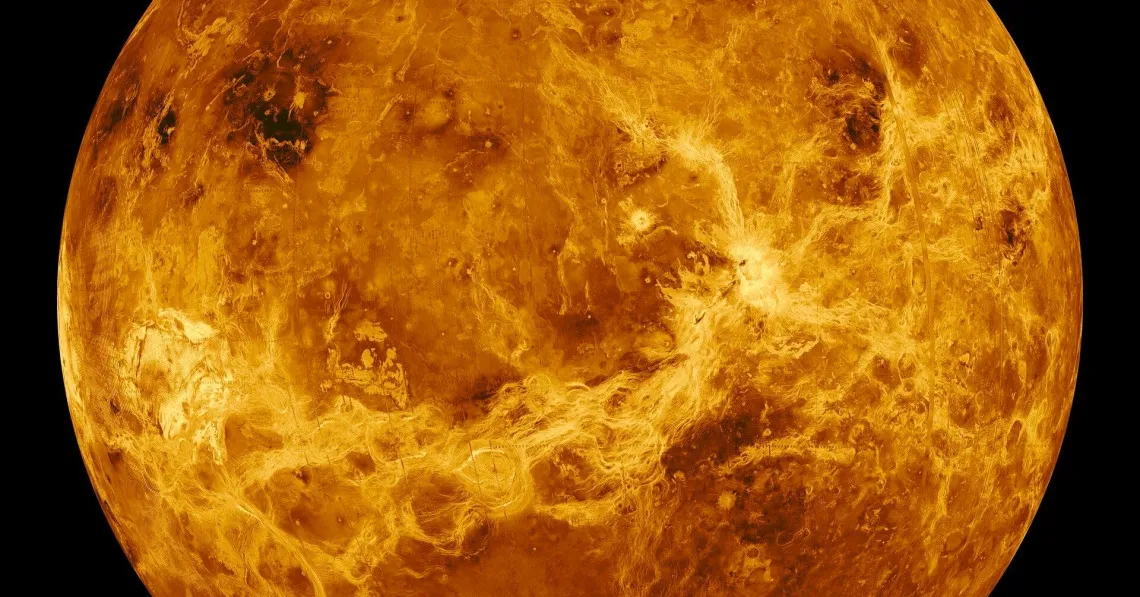
Ultraviolet view highlighting the distribution of sulfuric acid aerosols.
Acid Impact

Visualizing the degradation of standard materials under H₂SO₄ exposure.
H₂SO₄ Cycle

Concentration: 75% to 96% H₂SO₄
Solution: Teflon & Fluoropolymers
Phenomenon: Virga (Acid rain evaporating before surface)