
Landed Probe Lifespan
Landed Probe
Lifespan
SURFACE SURVIVAL DURATION // THERMAL DEGRADATION LOG
Select a Probe
Venus' surface temperature 467°C melts lead and the pressure 92 ATM crushes titanium. Click a mission to see how long they survived this "hell."
Lander Vitals
Thermal Endurance. Monitoring the structural integrity and internal CPU temperature against the supercritical CO₂ exterior.
- 🔥 Ext Temp: 465°C (Leads to solder failure).
- ⏲️ Avg Life: 60 to 120 minutes.
- 🛡️ Cooling: Phase-change heat sinks active.
Venera 7 Epoch
The First Contact. Dec 15, 1970. Despite a 17 m/s impact, the titanium sphere transmitted the first-ever surface data for 23 frantic minutes.
- ⏳ Duration: 23 Minutes (Record at the time).
- 📉 Signal: 1% strength (due to capsule tilt).
- 🌡️ Data: Confirmed 475°C surface temperature.
Venera 13 Record
The 127-Minute Champion. On March 1, 1982, this titanium fortress captured the first color panoramic views of the Venusian basalt plains.
- 🏁 Record: 127 minutes (Current world record).
- 🌋 Geology: First X-ray soil analysis (Leucitic Basalt).
- ❄️ Cooling: Lithium Nitrate Phase-Change cooling.
Vega 2 Highlands
The Ancient Crust. June 15, 1985. Landing in Aphrodite Terra, Vega 2 sampled rocks that suggest Venus once had a very different history.
- ⏱️ Surface Life: 56 Minutes.
- 🎈 Balloon Link: 46 hours of atmospheric floating data.
- 💎 Rock Type: Anorthosite (Ancient Highland Crust).
LLISSE Future
The Enduring Explorer. Moving beyond the "Lead Wall." LLISSE uses Silicon Carbide to turn Venus from a death-trap into a long-term laboratory.
- 🗓️ Life: 60+ Earth Days (Target).
- 💎 Tech: Silicon Carbide (SiC) Wide-Bandgap chips.
- 🔋 Power: High-Temp Molten Salt Batteries.
Paper
SURVIVAL LOG: THERMAL 🌡️
Ambient: 737 K. Internal: Rising. Shutdown: Imminent.
Sources
VENERA 13 RECORD
The Soviet lander holds the current record, surviving for 127 minutes in the Venusian furnace.
MISSION LOGSPHASE CHANGE COOLING
How landers use lithium nitrate or wax to absorb heat energy and delay thermal failure.
NASA COOLINGDAVINCI+ MISSION
NASA's upcoming probe designed to taste the atmosphere during a 63-minute descent to the surface.
FUTURE PROBESVenera Legacy
The Soviet Venera probes: The only craft to survive the 90-bar surface pressure.
Clockwork Rover
NASA’s AREE: A purely mechanical rover designed to operate without silicon chips.
DAVINCI+

New generation of atmospheric descent spheres for precision gas analysis.
Venera 7 Ignition
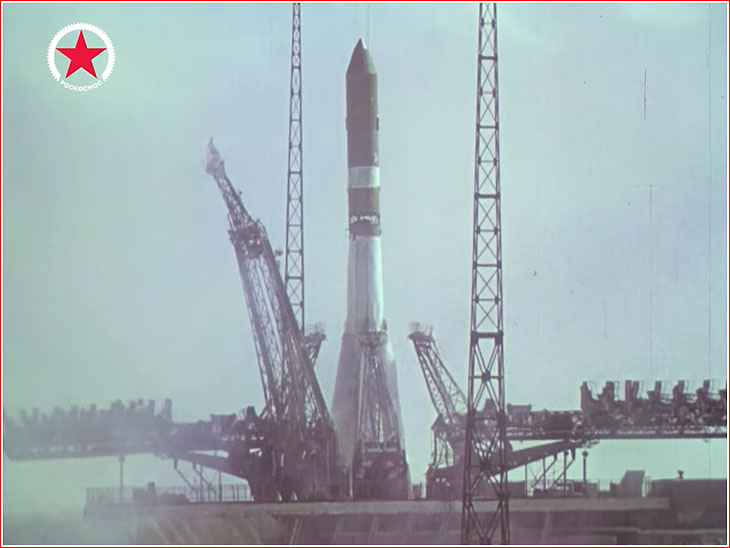
Challenge: 470°C Surface Heat
Lifespan: ~127 minutes (Record)
Source: RussianSpaceWeb / NASA
Venera Lander
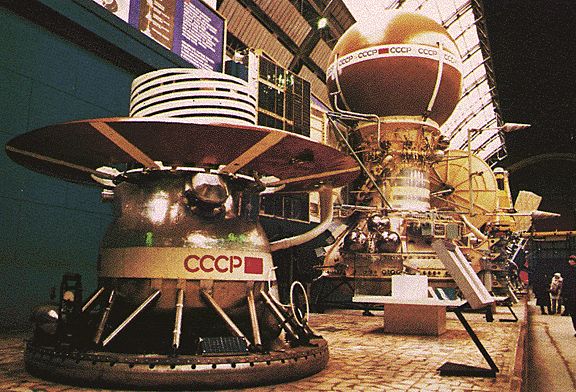
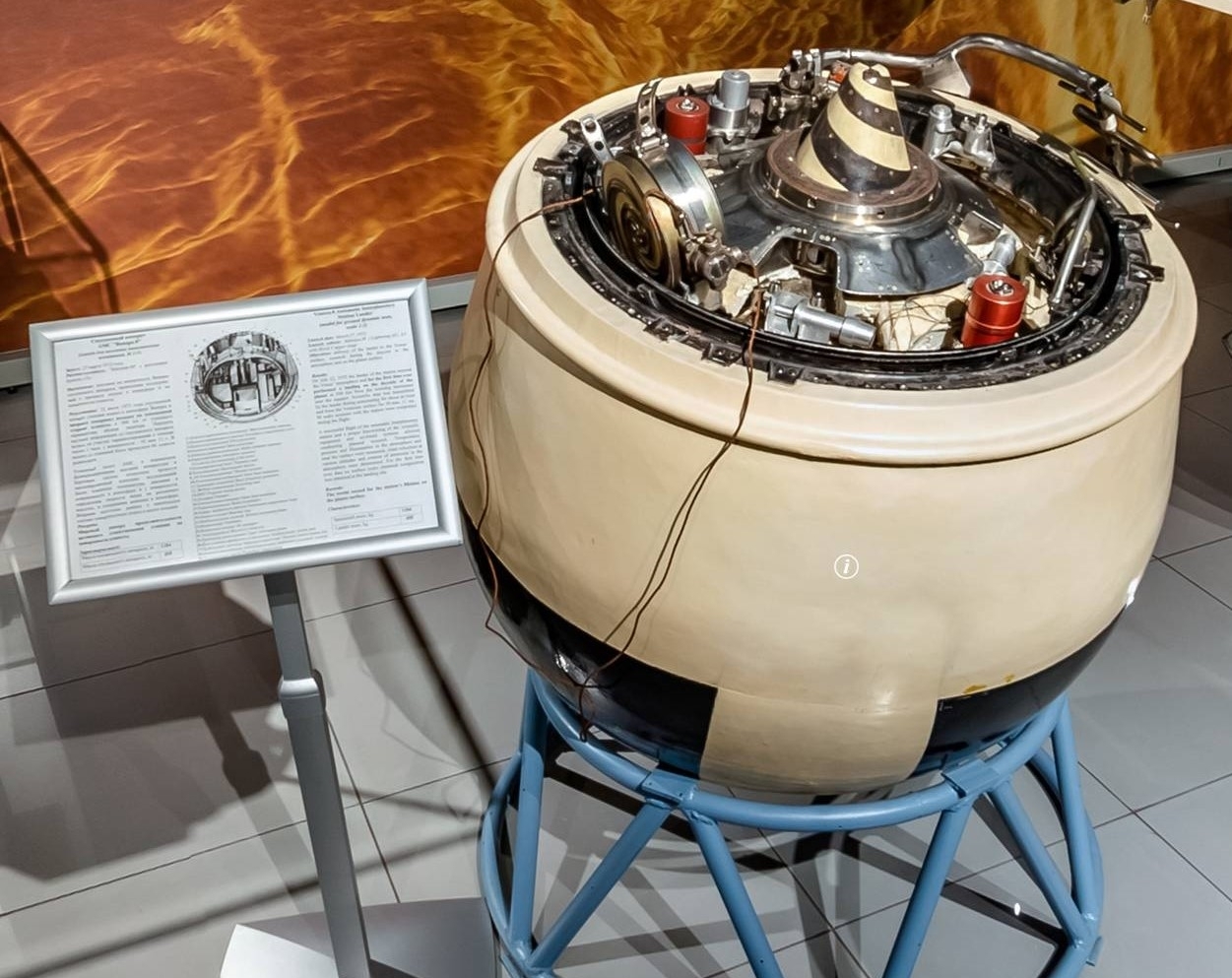
The heavy spherical pressure vessel designed to survive 90 atmospheres.
Venera View

Rare surface photography showing the orange-tinted basaltic plains.
Vega Craft
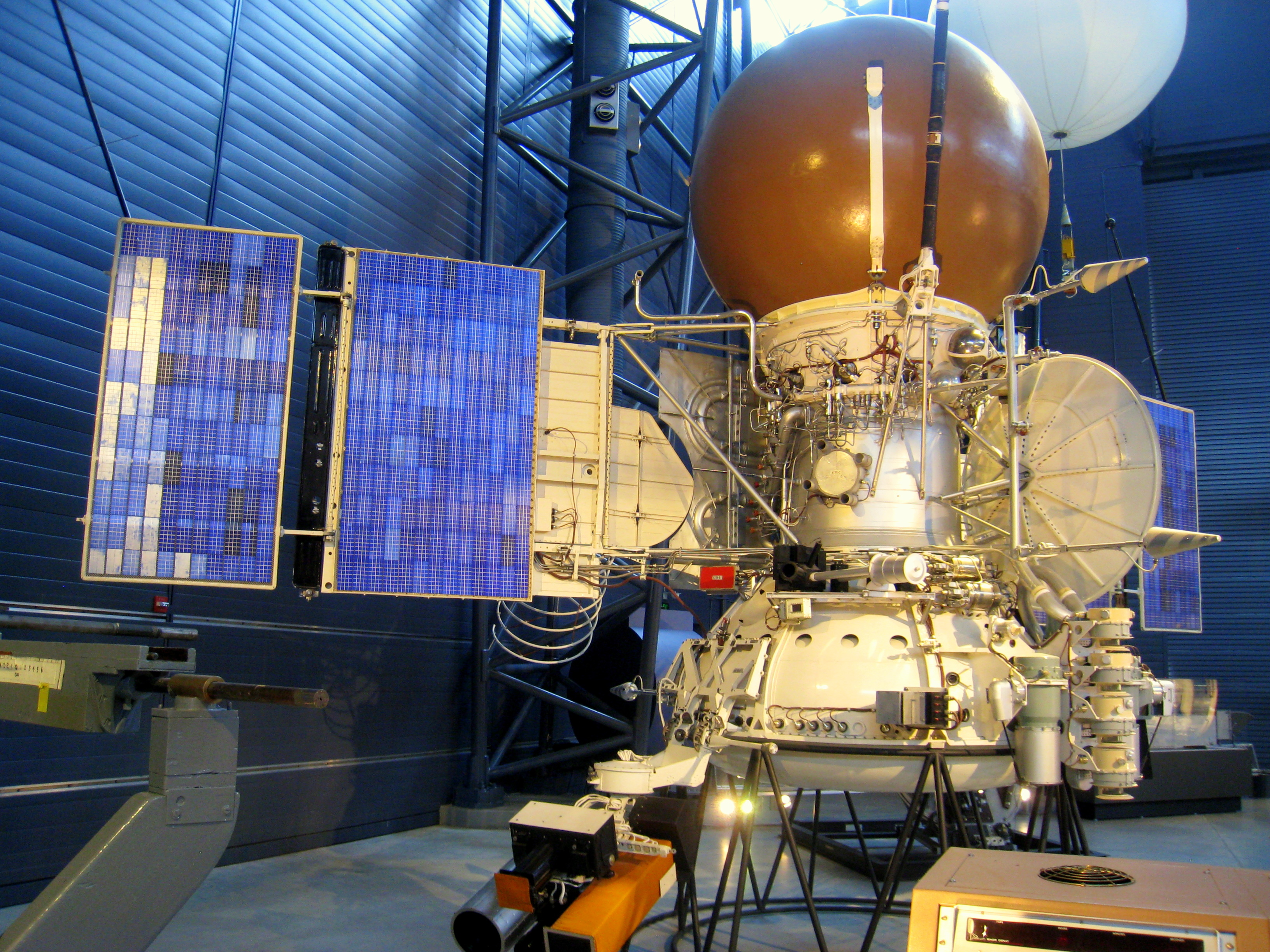
Museum model of the Vega 1 & 2 spacecraft, featuring complex instrument arrays.
Aero-Probe

Mission: Vega 1 & 2 (1985)
Altitude: 54 km (Balloon drift)
Tech: Helium-filled Teflon balloons
Venera 7 (1970)
The pioneer of planetary landings. It was the first spacecraft to land on another planet and transmit data back to Earth, proving Venus has a crushing surface pressure and temperatures high enough to melt lead.
Venera 13 (1981)
Famous for sending back the first color panoramic images of the Venusian surface. It also featured a mechanical drill to analyze soil samples in the extreme 457°C heat.
Vega 2 (1985)
A dual-purpose mission that dropped a lander and a balloon into the Venusian atmosphere before flying off to encounter Halley’s Comet. The lander operated on the surface for 56 minutes.
NASA LLISSE
The Long-Lived In-Situ Solar System Explorer is a modern project designed to survive the hostile Venusian environment for months rather than minutes, using high-temperature electronics.