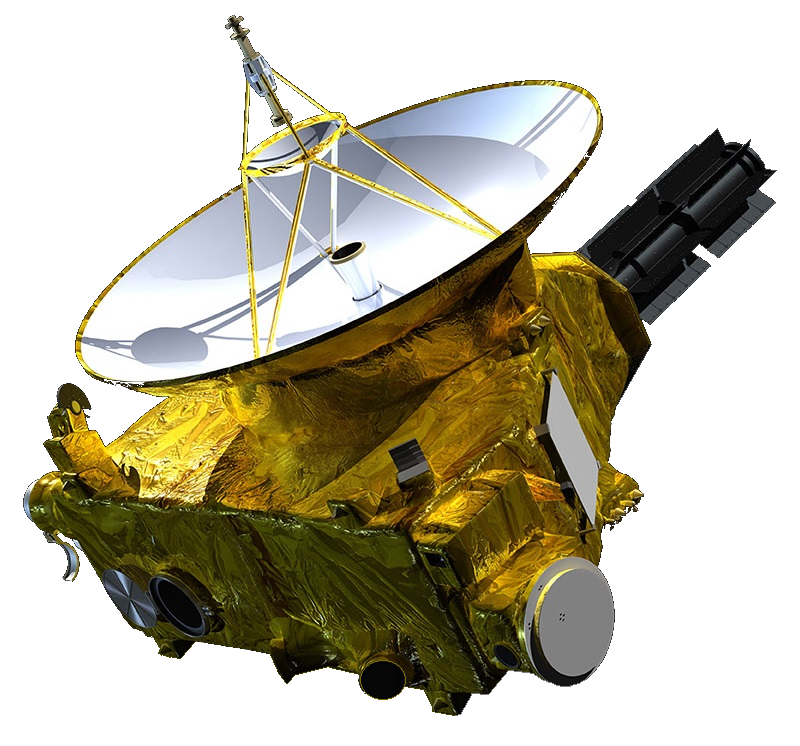
New Horizons
NEW HORIZONS
THE JOURNEY TO PLUTO & BEYOND
Exploring the Kuiper Belt
Launched in 2006, New Horizons traveled for over 9 years to reach Pluto, providing the first close-up views of the icy world.
Deep in the Kuiper Belt.
Fastest launch speed from Earth.
Heart Sync
Glacial Mapping. Monitoring the LORRI instrument buffer to track the nitrogen-ice plains of Sputnik Planitia.
- ❄️ Surface: Cryo-Convection Sync.
- 🏔️ Terrain: Water-Ice Mountain Protocol.
- 🌌 Atmosphere: Methane Haze Buffer.
Belt Sync
Primordial Mapping. Monitoring the Ultima-Thule buffer to track the contact-binary structure of Arrokoth.
- ☄️ Object: Planetesimal Sync.
- 🔴 Color: Tholin-Red Protocol.
- 🧱 Origin: Kuiper-Belt Buffer.
Atomic Sync
Power Mapping. Monitoring the RTG thermal decay to track operational life in the deep-freeze of space.
- ☢️ Fuel: Plutonium-238 Sync.
- 🛰️ State: Hibernation Protocol.
- ⚡ Efficiency: Multi-Mission Radioisotope Buffer.
Launch Sync
Velocity Mapping. Monitoring the Earth-Departure Buffer to track the fastest lunar crossing in history.
- 🚀 Departure: 36,000 MPH Escape Sync.
- 🌖 Transit: 9-Hour Lunar Protocol.
- ⏱️ Record: Kinetic Injection Buffer.
Paper
NEW HORIZONS UPLINK 🧊
Objective: 10-Item Kuiper Belt Calibration.
Sources
PLUTO HEART
Formally known as **Sputnik Planitia**, this nitrogen-ice glacier proved Pluto is geologically active, featuring flowing ices and mountain ranges made of water-ice.
PLUTO DATAARROKOTH FLYBY
In 2019, New Horizons visited **Arrokoth**, the farthest object ever explored. Its unique "double-lobed" shape provided key insights into planetary formation.
KBO DATALORRI CAMERA
The Long Range Reconnaissance Imager is the craft's high-resolution digital eye. It captured the iconic portraits of Pluto’s atmosphere and diverse moons.
OPTICS SPECS