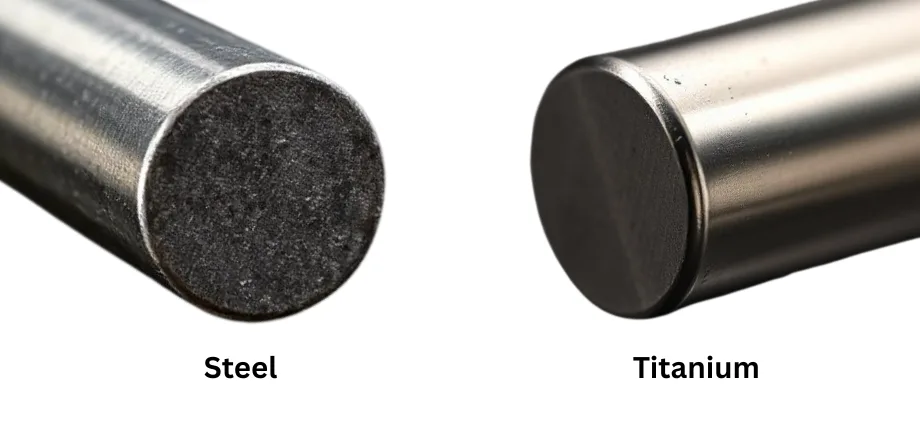
Titanium vs Steel
Material Hardening
STRUCTURAL STEEL
- • Rapid Creep Deformation at 450°C
- • Acidic Corrosion Vulnerability
- • High Thermal Expansion
TITANIUM (Ti-6Al-4V)
- • Superior Strength-to-Weight Ratio
- • Natural Acid Resistance (Passivation)
- • Stable up to 600°C Operation
| Property | Steel (AISI 304) | Titanium (Grade 5) |
|---|---|---|
| Melting Point | 1400°C | 1668°C |
| Density | 8.0 g/cm³ | 4.4 g/cm³ (Lighter) |
| Venus Survival | Sub-Optimal | Highly Recommended |
Material Forge
Strength vs. Acid. Choosing the right alloy is the difference between a successful landing and a crushed tin can.
- 🛡️ Titanium: High yield strength at 465°C.
- ⚖️ Mass: 40% lighter than steel for launch efficiency.
- 🌫️ Corrosion: Inert against H₂SO₄ clouds.
Titanium Hull
The Titanium Shield. Grade 5 Titanium is the only material light enough for launch and strong enough to withstand the Venusian "crush depth."
- 🛡️ Tensile Strength: 880+ MPa (Grade 5).
- 🧪 Acid Proof: TiO2 passivation layer prevents corrosion.
- ⚖️ Mass: 4,430 kg/m³ (45% lighter than steel).
Steel Skeleton
The Iron Anchor. While heavy, high-grade steel provides the thermal mass and mechanical toughness needed for external drills and landing gear.
- ⛓️ Durability: High resistance to mechanical wear and abrasion.
- 🌡️ Thermal Mass: Absorbs significant energy before melting.
- 🧪 Alloys: 316L and Inconel used to resist sulfidation.
Efficiency King
Titanium Wins. When every gram counts, Titanium provides the highest strength-to-weight ratio for the Venusian descent.
- 🚀 Launch Efficiency: 45% lighter than steel.
- 🛡️ Strength Retention: Maintains 450+ MPa at surface heat.
- 💎 Reliability: Superior acid resistance via TiO2.
Paper
MATERIALS LOG: METALLURGY 🛠️
Subject: Pressure Hull Integrity. Environment: 92 Bar / 737 K.
Sources
CORROSION RESISTANCE
Titanium naturally forms a protective oxide layer that is highly resistant to sulfuric acid compared to standard carbon steel.
ACID TESTSSTRENGTH-TO-WEIGHT
Titanium is ~45% lighter than steel with comparable strength, crucial for buoyancy in floating base designs.
MASS EFFICIENCYTHERMAL CONDUCTIVITY
Titanium has lower thermal conductivity than steel, helping to slow down the "thermal soak" that kills electronics.
HEAT INSULATION