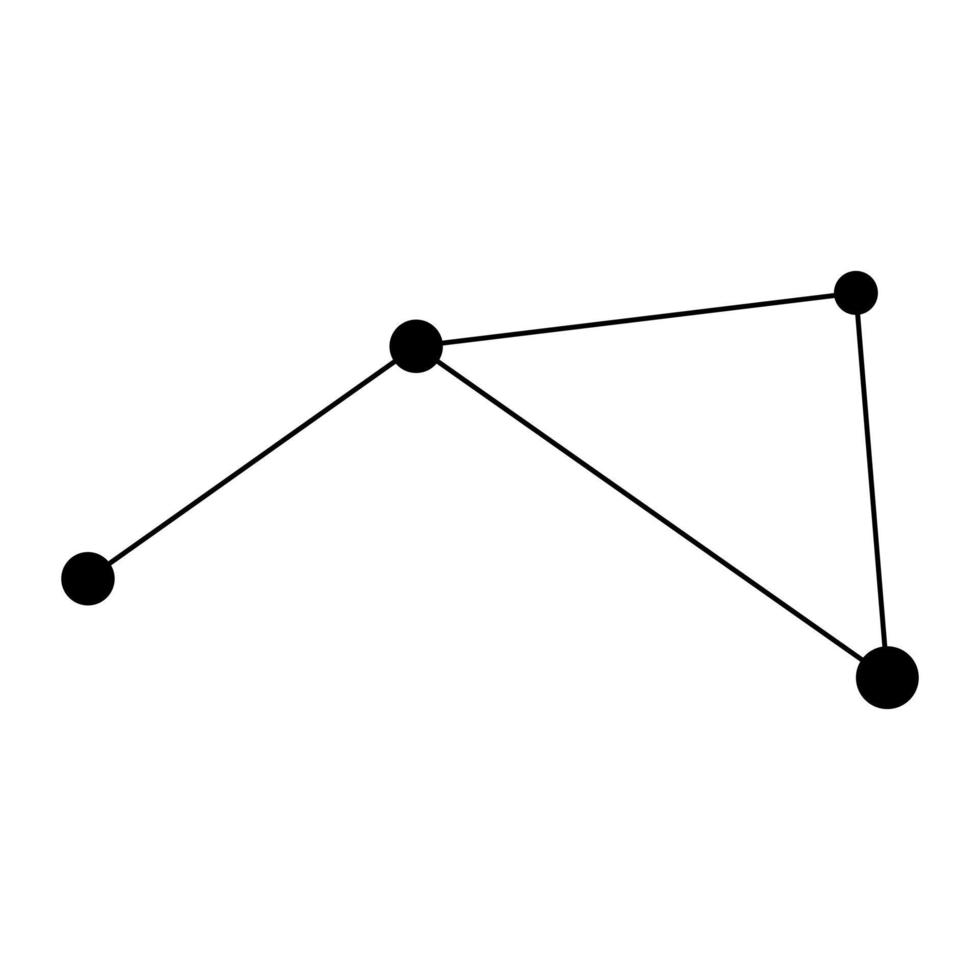
Constellation Antlia
ANTLIA PUMP
THE AIR PUMP CONSTELLATION
The Air Pump
Created by Nicolas-Louis de Lacaille in 1750. It commemorates the air pump invented by Robert Boyle. It is a faint constellation in the southern sky.
An orange giant star.
Visible from Earth.
Antlia Sync
Pneumatic Machine Mapping. Analyzing the 1750-era industrial constant of Nicolas-Louis de Lacaille. The Oat monitors the Alpha Antliae Magnitude to track this faint southern vector.
- 💨 Legacy: Antlia Pneumatica (Air Pump).
- 📡 Deep Sky: NGC 2997 Spiral Galaxy.
- 📐 Position: Southern Celestial Hemisphere.
Pneumatic Sync
Instrument Geometry Mapping. Analyzing the 1750 Lacaille constant. The Oat monitors the Boyle-Mariotte Law variables to track this non-mythological vector.
- 🧪 Origin: Created by Nicolas-Louis de Lacaille.
- 💨 Honoring: The Robert Boyle Air Pump.
- 🚫 Root: Zero Mythological Influence.
Magnitude Sync
Low-Luminosity Mapping. Analyzing the 4.0 magnitude threshold across the celestial grid. The Oat monitors the Photon Oat to track the 360-light-year distance of Alpha Antliae.
- 🌑 Threshold: No Stars Brighter than 4th Mag.
- 🟠 Alpha Antliae: K-type Orange Giant.
- 📏 Distance: 360 Light-Years From Earth.
Cluster Sync
Extragalactic Mass Mapping. Analyzing the Abell S0636 cluster density. The Oat monitors the Gravitational Binding Constant to track the Antlia Dwarf companion trajectory.
- 🌌 Abell S0636: High-Density Galaxy Cluster.
- 🛸 Antlia Dwarf: Local Group Companion.
- 🧬 Type: Dwarf Elliptical Galaxy.
Legacy of the Air Pump 📜
Paper
ANTLIA PNEUMATIC SCAN ⚙️
Objective: 10-Item Calibration of the Air Pump Sector.
Sources
ALPHA ANTLIAE
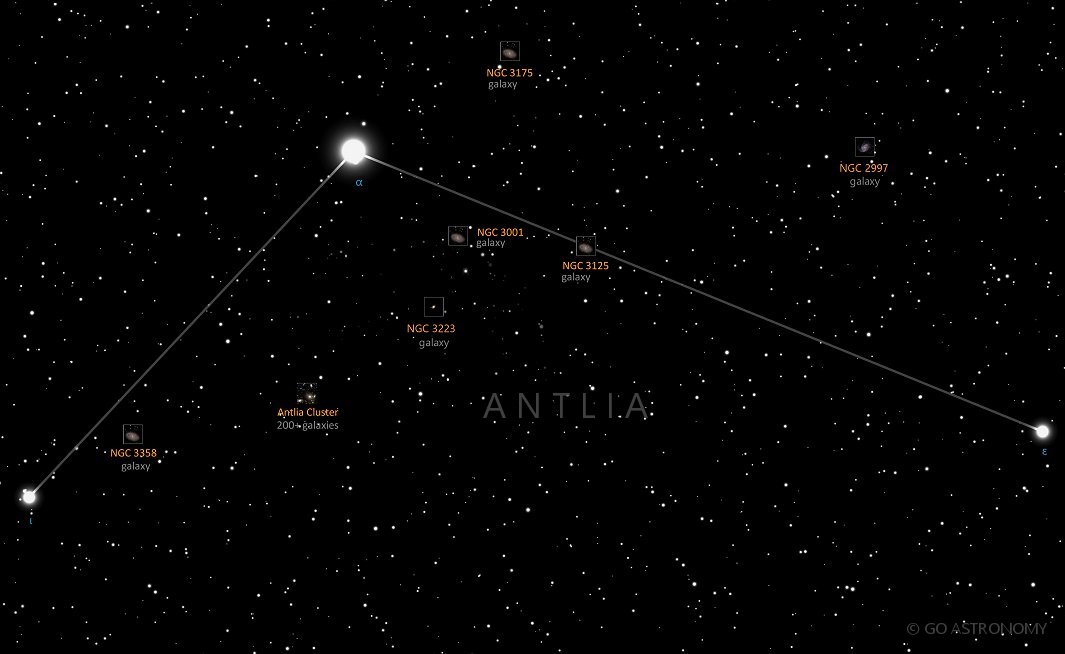
The brightest star in the constellation is an Orange Giant. It is roughly **320 light-years** away and is slightly variable in brightness.
ALPHA DATAANTLIA CLUSTER
This region contains the **Antlia Cluster**, a collection of approximately 230 galaxies. It is the third closest galaxy cluster to our Local Group.
DEEP SKYVISIBILITY
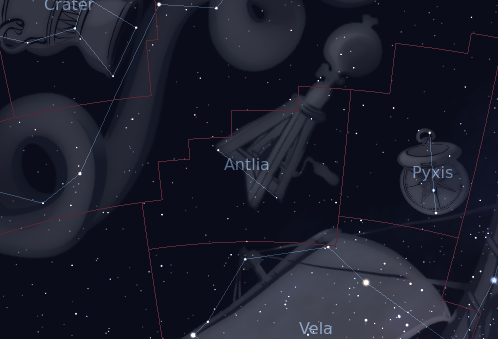
Antlia is best seen in the Southern Hemisphere during late winter and spring. It borders the constellation Hydra to the north and Vela to the south.
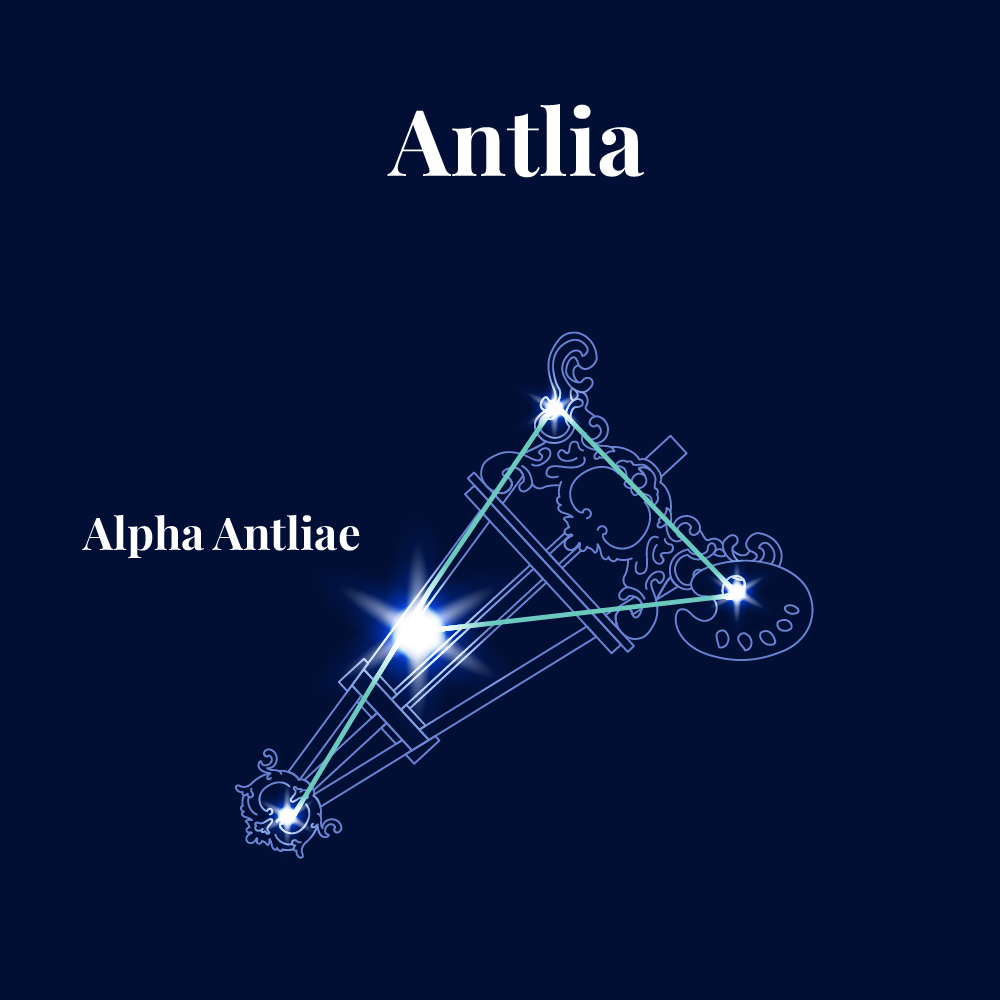
IAU SPECSIAU Boundaries

Official International Astronomical Union (IAU) chart showing the region's borders.
Stellar Map

A plot of the main stars, including Alpha Antliae, the brightest in the group.
Observational View

Wide-field visualization of where Antlia sits relative to Hydra and Vela.

Antlia Star Catalog
α Ant (Alpha Antliae) — Mag: 4.25
ε Ant (Epsilon Antliae) — Mag: 4.48
ι Ant (Iota Antliae) — Mag: 4.60
θ Ant (Theta Antliae) — Mag: 4.78
η Ant (Eta Antliae) — Mag: 5.24