Buoyancy Lift
Buoyancy Lift
AERODYNAMIC DISPLACEMENT MODEL // VENUS OBSERVER
Select Gas Type
At the surface, Venusian air is so dense that even human-breathable air provides massive upward buoyancy, similar to how air bubbles rise in water.
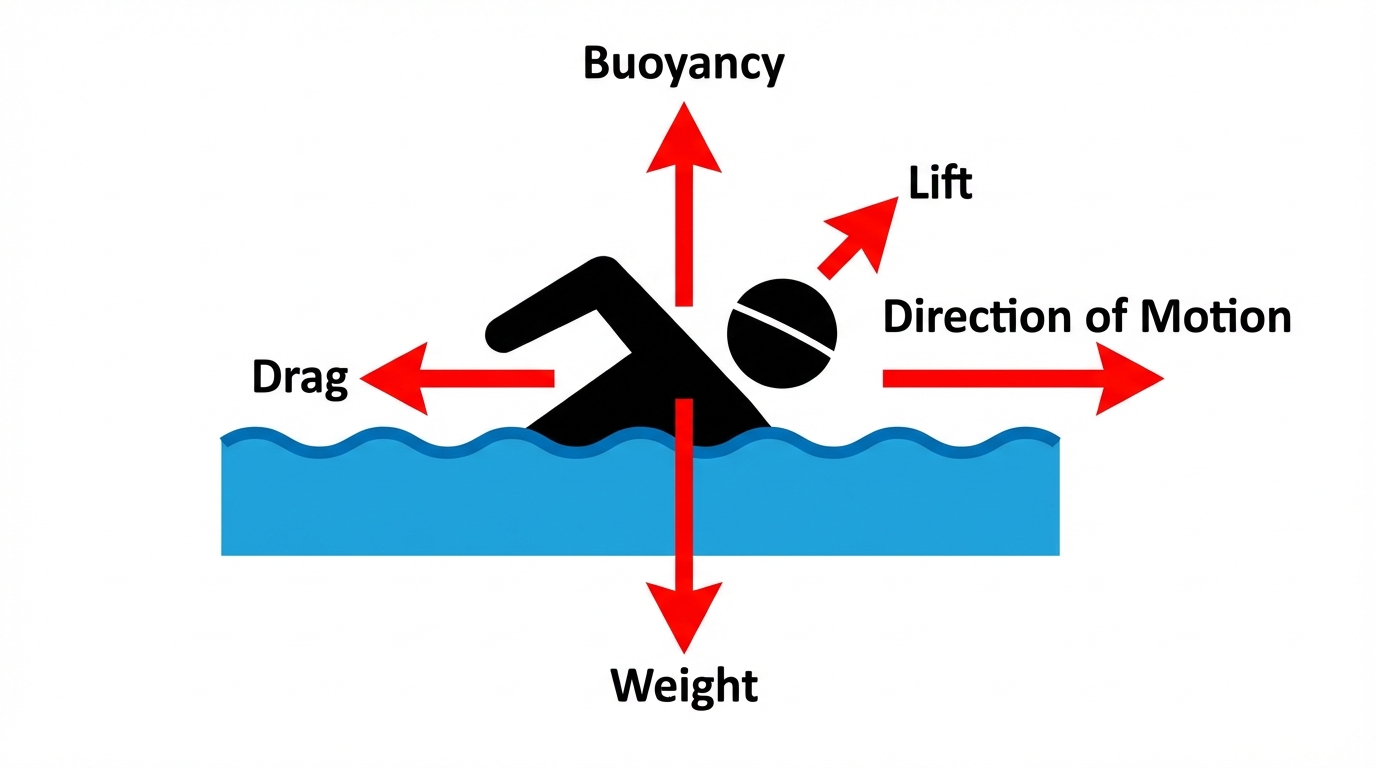
Buoyancy Lift
Fluid Displacement. The upward force generated when an object displaces its own weight in the surrounding atmosphere.
- ⚖️ Archimedes' Law: Lift equals the weight of the displaced gas.
- ☁️ Venusian Float: Breathable air acts as a lifting gas in CO₂.
- 🚢 Neutrality: The point where weight and buoyant force reach 0.
Breathable Lift
The Native Float. On Venus, Nitrogen and Oxygen are lifting gases. Your living space is its own flotation device.
- 🧪 Molecular Delta: Air (29g/mol) is significantly lighter than CO₂ (44g/mol).
- 🛡️ Zero Differential: Internal and external pressures are equal at 1.0 Bar.
- 🎈 Auto-Buoyancy: 1m³ of air lifts ~0.3kg of structure on Venus.
Vacuum Airshell
The Ultimate Buoyancy. By evacuating the interior of a rigid structure, we achieve the maximum possible lift in the Venusian sky.
- 🌌 Zero Mass Interior: Displacing 44g/mol CO₂ with 0g/mol vacuum.
- 🏗️ Lattice Rigidity: Must resist 1.0 Bar of compressive force at float altitude.
- 🚀 Max Payload: ~25% more lifting power than a standard air balloon.
Paper
VENUS BUOYANCY LOG 🎈
Density: 65 kg/m³. Earth-air is a lifting gas here!
Sources
HAVOC CONCEPT
NASA's "High Altitude Venus Operational Concept" for manned airships in the clouds.
EXPLORE HAVOCVEGA BALLOONS
The history of the 1985 Soviet balloons that successfully floated in the Venusian winds.
VEGA MISSIONSAEROBOT DESIGN
Technical engineering for variable-altitude balloons (Aerobots) for Venus exploration.
JPL AEROBOT