
Floating Base Stability
Floating Stability
System Online
Select a stability protocol to simulate the station's response to the 360 km/h Venusian wind shear.
Base Stability
Atmospheric Surfing. Stability at 50km is maintained by balancing internal air pressure against the 360km/h super-rotating winds.
- 🎈 Passive Lift: Breathable air provides 100% of required buoyancy.
- 🌪️ Wind Load: Aerodynamic "fins" stabilize the habitat during super-rotation.
- 🛡️ Corrosion: PFA coatings protect against sulfuric acid clouds.
Super-Sync
Velocity Lock. At 50km, the base enters the 'Super-Rotation' stream, moving 60x faster than the surface below to maintain thermal equilibrium.
- 🔄 Rotation: Full planetary circuit every 100 hours.
- 📐 Alignment: Vertical trimming used to stay in 'Laminar Flow' layers.
- 🔋 Solar Gain: High-speed drift ensures 24/7 sunlight access.
Active Ballast
Precision Buoyancy. By compressing and shifting CO2 ballast, the base maintains a 'hover-lock' at 50km, neutralizing vertical wind shear and thermal lift.
- 💧 Liquid Shift: Rapid deck-leveling via fluid transfer.
- 🌪️ Altitude Trim: Gas compression for 100-meter vertical precision.
- ⚙️ Response: Sub-second latency in ballast-valve actuation.
Gyro-Sync
Instantaneous Leveling. Control Moment Gyros provide the millisecond-response needed to neutralize atmospheric shear before it affects habitat comfort.
- ⚙️ Rotor Speed: 15,000+ RPM for high-inertia torque.
- 📐 Precision: Holds level within 0.05° of the local horizon.
- ⚡ Active Response: Zero-propellant, electrically driven stability.
Paper
STABILITY LOG 🏗️
Objective: Maintain Horizontal & Vertical Equilibrium in 100 m/s winds.
Sources
AERODYNAMIC LOADS
NASA technical papers on managing high wind speeds and super-rotation for stable flight.
WIND ANALYSISBUOYANCY CONTROL
Methods for variable altitude adjustment to find the most stable pressure layers.
ALTITUDE SYSTEMSSTATION-KEEPING
Research on solar-powered propulsion for keeping floating bases in a fixed geographic position.
PROPULSION DATACloud Habitat
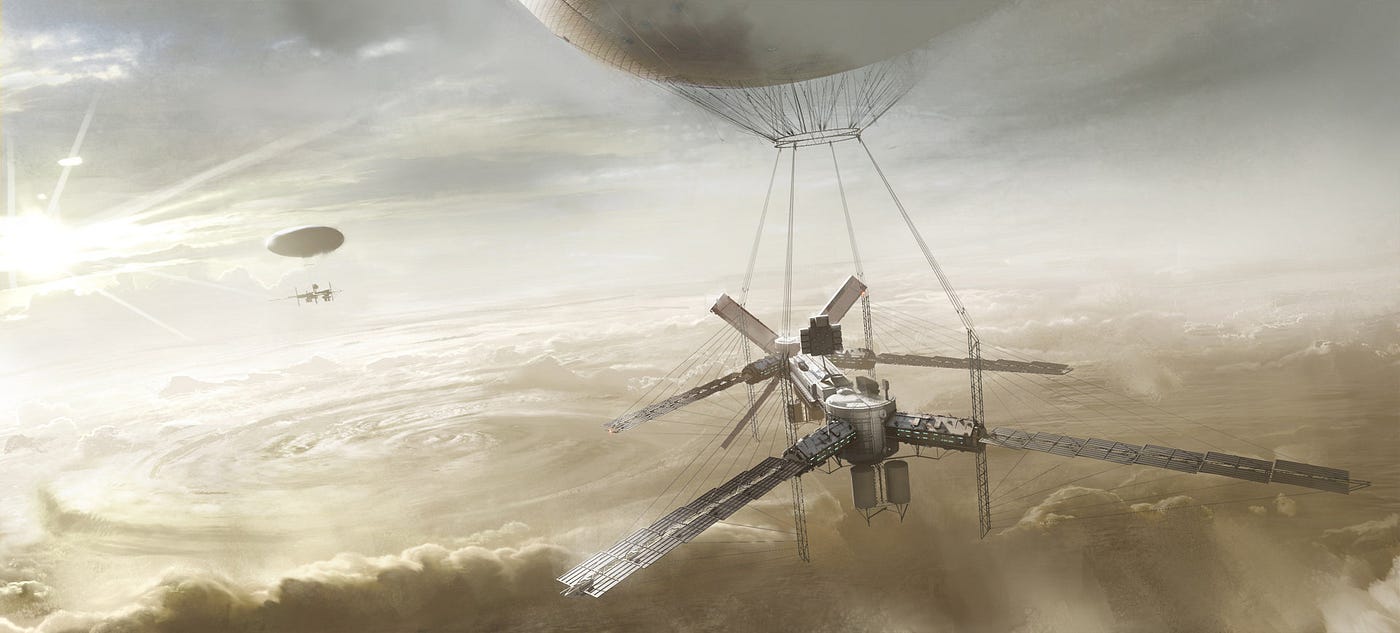
Multi-tier floating colonies anchored in the upper atmosphere.
Base Dynamics

Structural cross-sections of the pressure vessels and lift bags.
V.I.S.R.U.
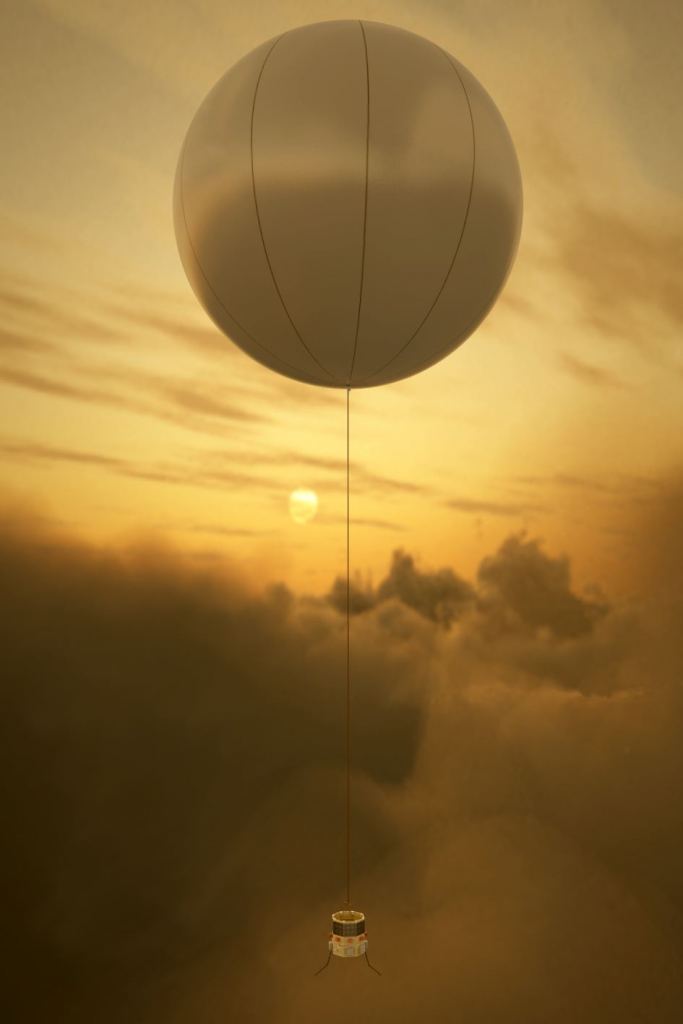
Lift Gas: Breathable Air (N₂/O₂)
Protection: Acid-Resistant Polymers
Atmosphere: 96% CO₂ (Resource rich)
Source: Venus Exploration Project