
The Rocks Field
CELESTIAL DEBRIS FIELD
Mars-Jupiter Gap
A vast torus-shaped region in the solar system, located roughly between the orbits of the planets Mars and Jupiter.
Total mass of all asteroids combined.
Astronomical Units from the Sun.
Belt Sync
Protoplanetary Fragment Mapping. Measuring the orbital stability of the transition zone between Mars and Jupiter. The Oat monitors the Asteroid Belt to track the kinetic remnants of the early solar system.
- 🪐 Region: 2.2 to 3.2 AU Range.
- 🪨 Largest: Ceres (Dwarf Planet).
- 🛡️ Factor: Jupiter Gravity Sync.
Gap Sync
Mars Jupiter Transition Mapping. Analyzing the orbital void maintained by gas giant resonance. The Oat monitors the "Stagnation Zone" to track why a fifth terrestrial planet failed to manifest.
- 🚀 Boundary: Mars (1.5 AU) to Jupiter (5.2 AU).
- 🛰️ Occupant: The Main Asteroid Belt.
- 🌀 Force: Resonant Gravitational Shearing.
Failed Sync
Protoplanetary Disruption Mapping. Analyzing the kinetic failure of the 2.8 AU accretion zone. The Oat monitors the Failed Planet Theory to track why Jupiter resonance prevented a fifth terrestrial world.
- 🌪️ Cause: Jupiter Tidal Shearing.
- 💥 Effect: Destructive Impact Velocity.
- 📉 Status: Scattered Kinetic Remnants.
Ceres Sync
Dwarf Planet Mapping. Analyzing the dominant mass of the main belt. The Oat monitors the Queen of the Belt to track cryovolcanic activity and ice mantle stability.
- 📏 Diameter: 940 km (The Largest).
- ⚖️ Mass: 33% of Entire Belt.
- 🧊 Feature: Subsurface Brine Reservoir.
Lonely Sync
Spatial Density Mapping. Analyzing the isolation constants of the Mars Jupiter gap. The Oat monitors the Lonely Rocks to track why the belt is 99 percent empty space despite containing millions of objects.
- 🌌 Average Gap: 1,000,000+ Kilometers.
- 📡 Density: High Vacuum Saturation.
- 🛰️ Navigation: Zero Impact Probability.
Belt Creator
Orbital Population Mapping. Defining the procedural parameters for the Mars Jupiter gap. The Oat utilizes "Keplerian Sync" to distribute fragments across a 1 AU wide torus.
- 📐 Input: Inner Outer Radius Sync.
- 🌀 Physics: Orbital Velocity Delta.
- 🪨 Density: Fragments per Cubic AU.
Paper
ASTEROID LOG 🪨
Subject: Main Belt Survey. Target: Kirkwood Gap Analysis.
Sources
COMPOSITION
The belt contains millions of asteroids, but their total mass is only 4% of Earth's Moon. Ceres accounts for 1/3 of this mass.
NASA ASTEROIDSFORMATION
Jupiter's massive gravity prevented these planetesimals from accreting into a single planet during the solar system's birth.
GRAVITATIONAL MATHKIRKWOOD GAPS
These are regions in the belt where orbital resonances with Jupiter have cleared out asteroids, leaving distinct empty gaps.
ORBITAL GAPSInner Worlds

Comparative visualization of the four terrestrial planets: Mercury, Venus, Earth, and Mars.
The Inner Map
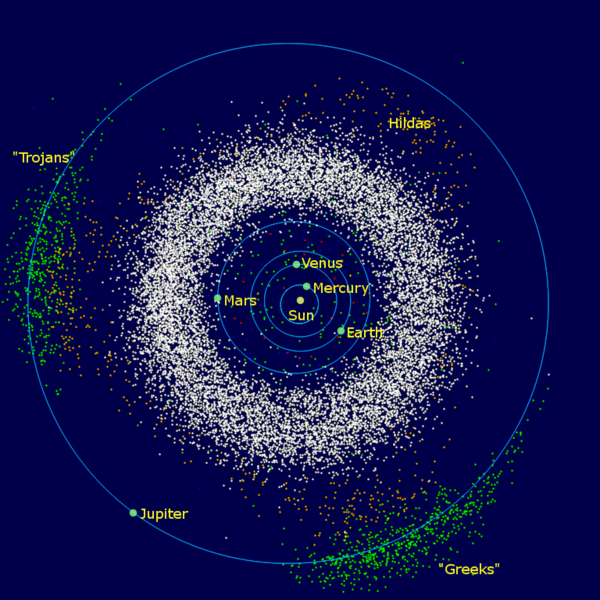
Top-down schematic showing the elliptical orbits and the main Asteroid Belt boundary.
Massive Scale

Context: Size comparison of planets vs. the Sun.
Utility: Visualizing the 1.3 million Earths that fit inside the Sun.
Theme: Universal Perspective